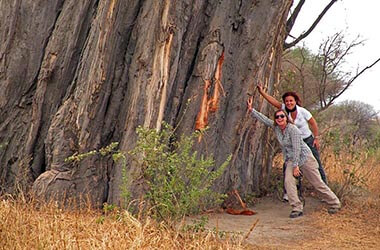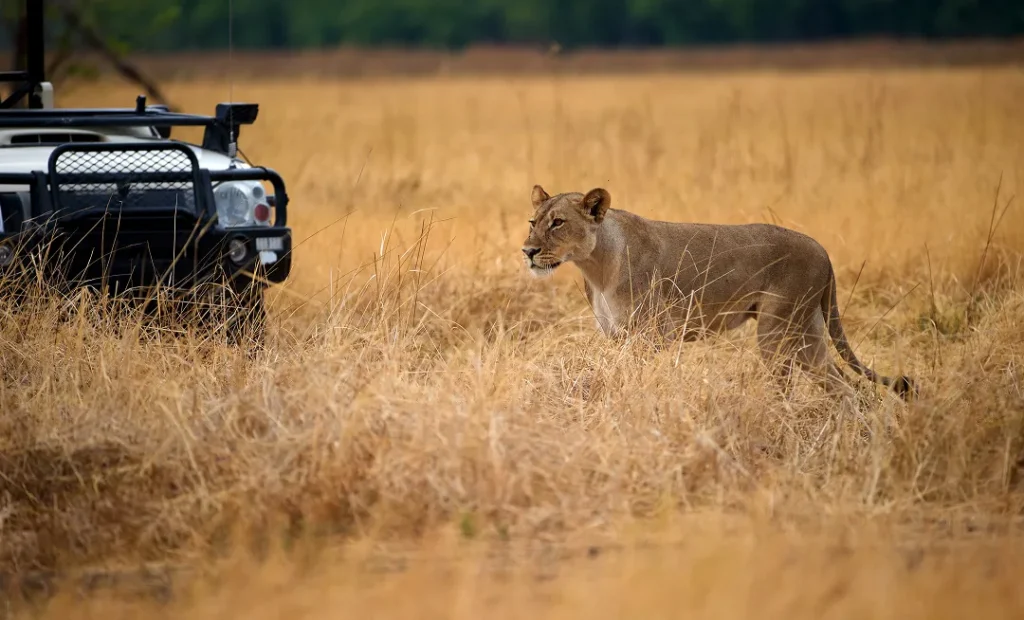
Upon your arrival at Kilimanjaro (or Arusha) Airport, our staff will welcome you, to take you to your lodge in Arusha.
In the evening, there will be a briefing, with all the information you need to make the best of the trek.
Dinner and overnight stay at Planet Lodge (or similar category).
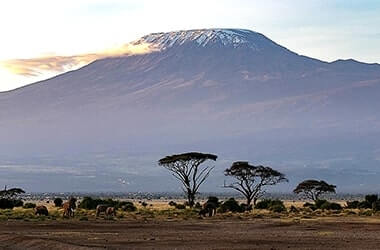
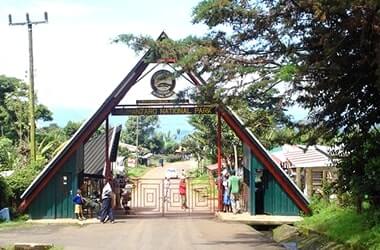
Early in the morning, after breakfast, your guide and a support crew will arrive at the hotel to take you to the eastern entrance of Kilimanjaro National Park: Marangu Gate (1,860 m). On the way, a short briefing.
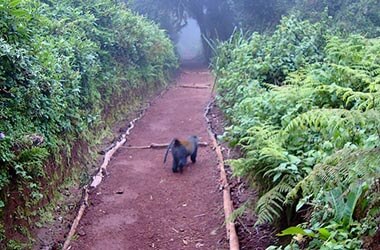
Upon arrival, after a quick formality of acquiring climbing permits and registering with the search and rescue service, the group will begin the trek to Mandara Hut (2,700 m). The trekking route involves passing through rainforest (where tropical drizzle is highly likely), so we recommend that you bring not only spare clothes, but also a raincoat.
Upon reaching the camp, our support crew will set up equipment and prepare meals.
Throughout the itinerary, you will spend the night in characteristic structures, a great alternative to those who do not want to sleep in tents.
From this point on, considering the altitude, the following instructions are highly recommended:
Refrain from alcohol and caffeine consumption.
Height difference: Marangu Gate (1,860 m) – Mandara Hut (2,700 m)
Distance to travel: 11 km
Walking time: 5-7 hours
Early in the morning, after breakfast, we will leave Mandara Hut to begin a moderate trek to the second high altitude camp: Horombo Hut (3,720 m).
By reaching the camp, you will be able to observe two volcanoes at the same time-Kibo and Mawenzi.
Several hours after lunch, you will need to do an acclimatization hike in the direction of Kibo Hut with an elevation gain of 200 meters, then climb up to Horombo Hut, where dinner will be prepared for you.
Note: The acclimatization hike is an easy trek with a slight increase in altitude done to speed up the acclimatization process. One must take acclimatization hikes very seriously, as they help increase the chances of successfully climbing Kilimanjaro without any problems.
Trekking from Mandara Hut to Horombo Hut:
Height difference: Mandara Hut (2,700 m) – Horombo Hut (3,720 m)
Distance to travel: 10 km
Walking time: 5-6 hours
Acclimatization hike:
Height difference: Horombo Hut (3,720 m) – Destination point on the way to Kibo Hut (3,920 m)
Distance to travel: 2.5 km
Walking time: 1-2 hours
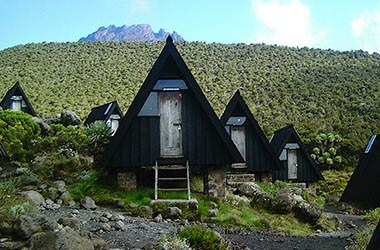
Today, immediately after breakfast, you will start the trek to Kibo Hut (4,700 m).
The trek is not very difficult, but you need to follow a proper pace to keep your strength up to the summit of Kilimanjaro.
Upon arrival at camp, lunch will be served, after which it is advisable to rest and get some sleep, avoid any strenuous activity, and drink plenty of water.
Elevation gain: Horombo Hut (3,720 m) – Kibo Hut (4,700 m)
Distance to be covered: 10 km
Time to go: 4-8 hours
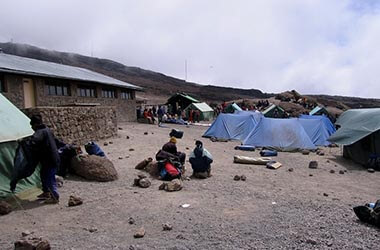
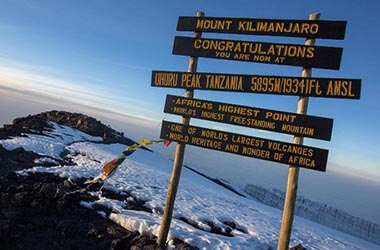
Depart overnight from Kibo Hut (4,700 m) and begin trekking to the summit of Kilimanjaro: Uhuru Peak (5,895 m). The trek will be physically moderate, but the altitude can be a problem. Throughout the trek, each pair of climbers will be accompanied by their guide, who will monitor their stamina and mental clarity. After successfully reaching Uhuru Peak, you will be able to descend to the nearest glacier if you wish. Then you will return to Kibo camp and after a two-hour rest, continue the descent to Horombo Hut (3,720 m).
Note:
Don’t forget that 90% of all accidents occur during the descent, so pay attention!
Elevation gain: Kibo Hut (4,700 m) – Uhuru Peak (5,895 m) – Horombo Hut (3,720 m)
Distance to travel: 16 km
Walking time: 9-12 hours
After a nice breakfast in the morning, we will head to the exit of Kilimanjaro National Park: Marangu Gate (1,860 m).
After the descent, the entire group will gather for final greetings and sharing of their thoughts on this fantastic experience in the guestbook. Climbers will be issued a certificate attesting to the climb.
Upon completion, transfer to lodge in Arusha.
Height difference: Horombo Hut (3,720 m) – Marangu Gate (1,860 m)
Distance to travel: 18 km
Walking time: 5-6 hours
Dinner and overnight stay at Planet Lodge (or similar category)
Breakfast and relaxation in the lodge.
Then our guide will take you to a restaurant for lunch. When we finish, we will continue to Karatu, a village adjoining the Ngorongoro Conservation area, where we will have a tour and spend the night.
Dinner and overnight stay at the Marera Valley Lodge (or similar category)
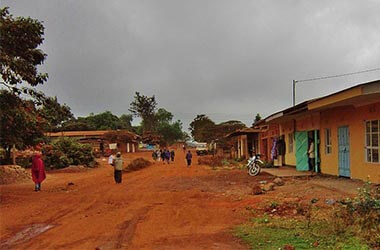
After breakfast, you will visit the Ngorongoro Conservation Area, one of the world’s most famous safari spots, declared a UNESCO World Heritage Site in 1978 and an International Biosphere Reserve in 1981.
You will enter inside the Ngorongoro Crater, which is 2,200 meters above sea level and is the largest uninterrupted caldera in existence in the world and one of the natural wonders of Africa with the presence of some 30,000 large mammals resident year-round, such as buffalo, lions, elephants, cheetahs and rhinos, and many varieties of birds, such as flamingos, eagles, buzzards, ostriches and hawks.
Il permesso per i fotosafari all’interno del Cratere ha una validità max di 6 ore.
Depart for the park early in the morning. Lunch in the park.
After lunch, continue the photo safari along the road from NCA to Serengeti and arrive at tented camp around h. 18:00.
(NCA – Serengeti transfer: about 3 hours, on dirt path)
Dinner and overnight stay at Serengeti Heritage Luxury Tented Camp (or similar category)
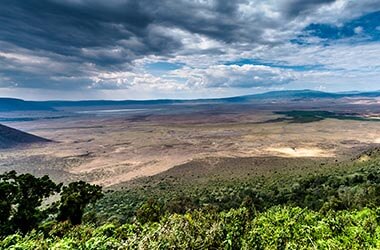
After breakfast, you will explore Serengeti National Park, the extraordinary place where legend meets reality, represents the oldest and largest park in Tanzania, covering an area of 14,763 square kilometers, so much so that the name, of Maasai origin, Siringet, means “Boundless Plain.”
Boundless plains await you, along with the great migration of herbivores, especially wildebeests and zebras, prides of lions, and other predators such as hyenas, cheetahs, leopards, jackals, crocodiles…
Depart for the park early in the morning.
Lunch in picnic area in the park.
Return to tented camp by h. 18:00.
Dinner and overnight stay at Serengeti Thorn Tree Tented Camp (or similar category).
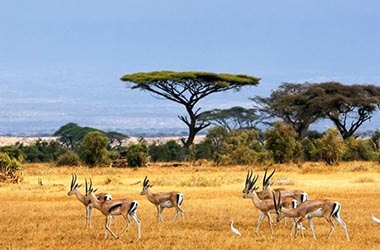
After breakfast, you will continue your tour of the extraordinary Serengeti National Park.
The endless grasslands are occasionally interrupted by bizarre granite formations, the kopjes, where large predators such as lions like to lie down or hide waiting for possible prey to pass by.
You can see crocodiles, hippos and many other water animals along the rivers, including leopards that often bask in the branches of the umbrella acacias present here.
Depart for the park early in the morning. Lunch in equipped area in the park.
After lunch, the photo safari continues along the road to the NCA, then on to Karatu. Arrive at the lodge by h. 18:00.
(Serengeti – Karatu transfer: about 3 hours and 30 minutes, on dirt track and road)
Dinner and overnight stay at Marera Valley Lodge (or similar category).
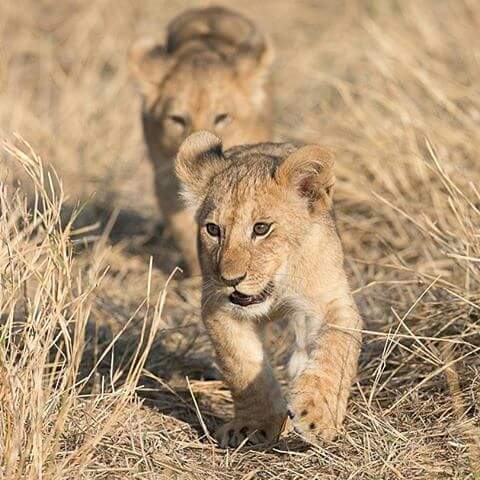
After breakfast, you will visit Tarangire National Park.
Here the rolling sylvan savannah, dotted with majestic baobab trees, many of them more than 2,000 years old, is home to the largest elephant population in northern Tanzania.
During the late dry season, the park is home to the highest density of wildlife on the entire continent, and animal observation is absolutely stunning.
Depart for the park early in the morning.
Lunch in a picnic area in the park.
In the afternoon, we will drive you back to the airport, returning to Italy with your heart filled with an unforgettable experience.
(Tarangire – Airport transfer: about 3 hours, by road)