

Ruaha National Park
Among the many safari destinations, the Ruaha National Park, known in English as Ruaha National Park, which is the largest park in all of Tanzania, certainly cannot be missed. Ruaha boasts a remarkable 20,226 km2 of land area second only to the Selous Wildlife Reserve.
Unlike the better-known parks of the North, Ruaha Park is a little-tourist destination that has remained unspoiled and unexplored, whose name originates from the Great Ruaha River. For many years, in fact, the park remained inaccessible and very few had access to it, which is why today it is one of the most unaltered parks.
Characteristics of Ruaha
This enchanting and pristine park in southern Tanzania is a coveted destination for those who want to experience photographic safaris and take pictures of beautiful, colorful birds. In fact, Ruaha is home to as many as 571 different species of birds, including hornbills and numerous migratory species passing through.
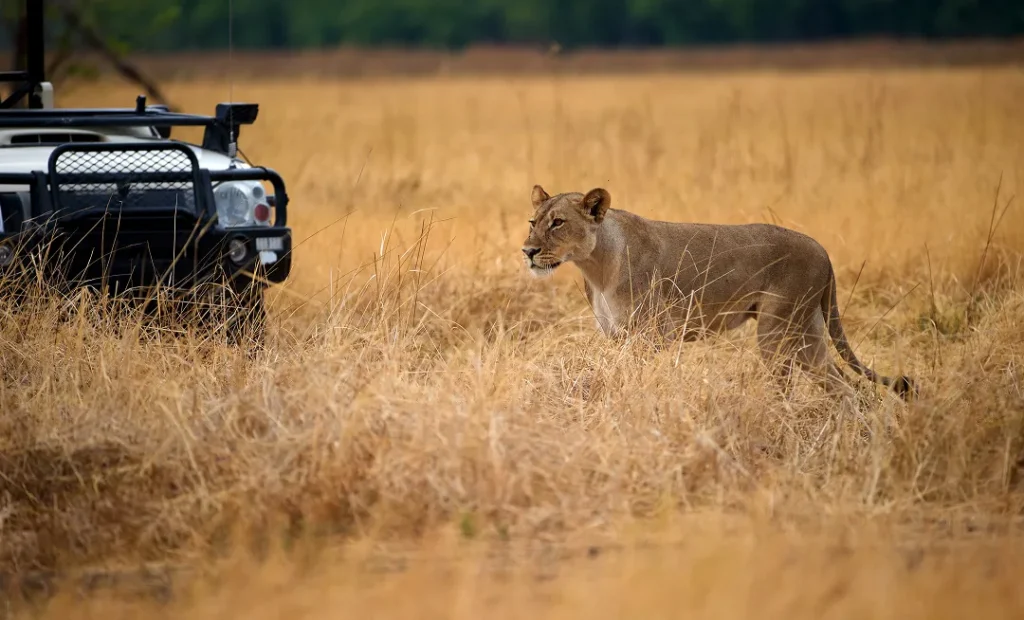
Many other animal species walk this wildlife reserve. Some of the most coveted animals that can be seen on safari in the Ruaha are: lions, East African cheetahs, lycaon, giraffes, African buffalo, hyenas, leopards, and antelopes.
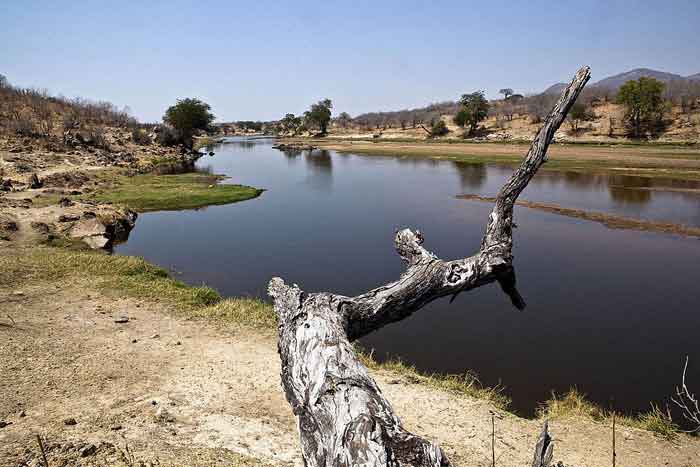
At the river, you can also see numerous hippos and even some crocodiles.
The park still appears to be devoid of human settlements, but in its surroundings it is not difficult to find accommodations. Within Ruaha National Park, however, there is only the Ruaha River Lodge and a few permanent or seasonal tented camps.
There are also several public campgrounds run by park operators, a hostel and the well-known bandas, ranger-controlled cottages.
Flora and fauna of Manyara Park
As you approach the lake, the forest thins out, giving way to small savannas populated by giraffe, warthog, wildebeest, zebra and buffalo. You come to the shore of the lake, a flat expanse of lake environments, marshes and reeds, where lazy hippos rest all day almost completely submerged in water and hundreds of colorful migratory birds, such as pelicans, flamingos, herons, blackbirds and ducks, occupy its waters.
It is possible to see hippos much more closely in this park than in other parks, thanks in part to the presence of wooden piers above the lake, on which you can walk, fully immersing yourself in nature and feeling part of it.
Continuing on, the path narrows to a charming little strip of land surrounded by the lagoon, the landscape is surreal, the fauna very diverse, especially the birds, which are really numerous, such as ibis mignattai, white pelicans, huge marabou, ducks and geese, and some large mammals, such as buffalo.
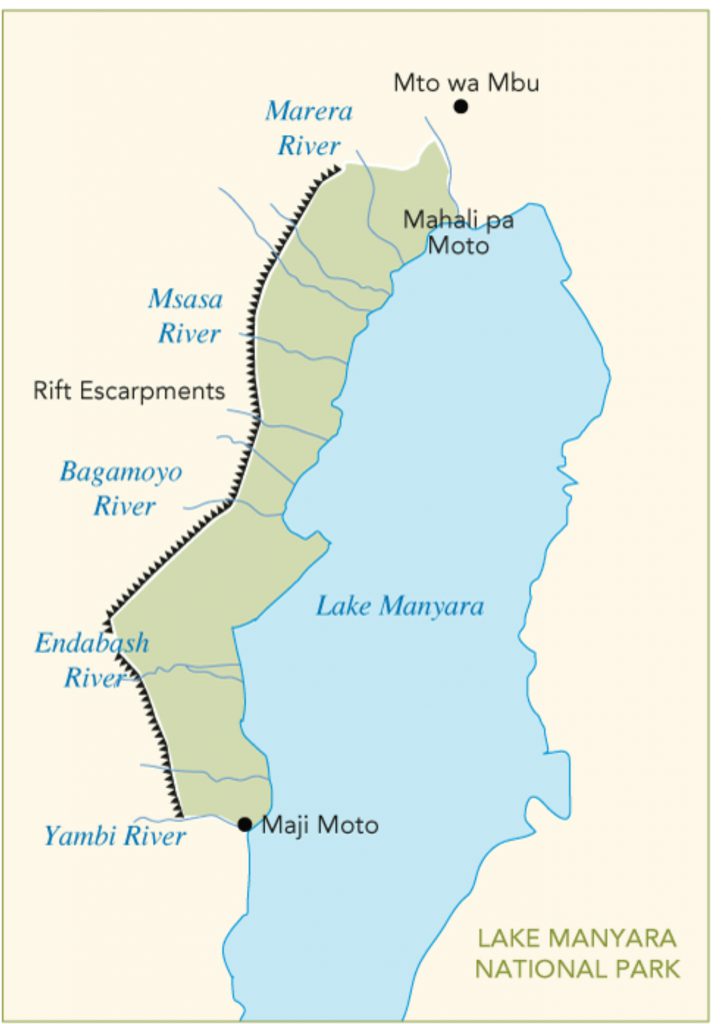
In the western part of the lake, however, one finds oneself in a pathway that separates the lake from an escarpment, where intense geothermal activity, present throughout the Rift Valley, has led to the formation of a number of hot springs of a sulfurous nature that attract many flamingos insensitive to the high temperatures, which in some cases reach as high as 76° C.
Finally, we pass through a forested area rich in acacia and palm trees that extends south of the forest and is crossed by several small rivers. Here it is possible to spot lions known as arboreal lions, which have a habit of climbing the branches of umbrella acacia trees, which is quite unusual for this type of feline. There are also many giraffes in this area, which prefer to eat the leaves of the taller and seemingly unreachable spiny acacias.
Why visit Ruaha Park
The spectacular scenery before which you will be confronted once you arrive at Ruaha National Park will fill your heart with genuine awe, sparked by the beauty of the park’s pristine nature. The forests have changed and evolved mutating without human tampering, creating enchanting baobab forests, and near the Ruaha River you will be able to encounter many different animal species and experience an unforgettable Tanzania safari.
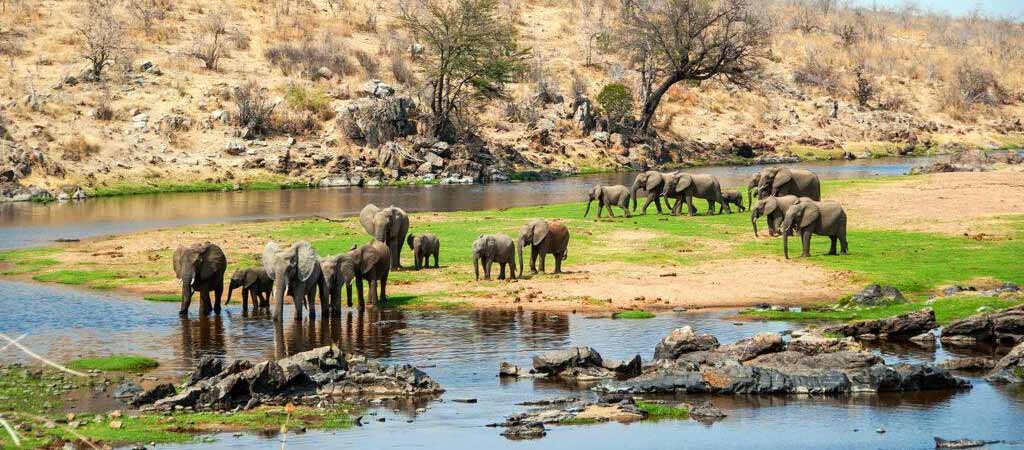
The largest concentration of lesser and greater antelope awaits you here, as well as the largest elephant population in all of Africa, numbering about 12,000.
The park is still found to be devoid of human settlements, but in its surroundings it is not difficult to find accommodations. Within Ruaha National Park, however, there is only the Ruaha River Lodge and a few permanent or seasonal tented camps.
There are also several public campgrounds run by park operators, a hostel and the well-known bandas, ranger-controlled cottages.
Discover safari itineraries in the Ruaha
BOOK YOUR SAFARI