

If you have chosen to embark on a trip to Tanzania or Zanzibar, you have made one of the best decisions of your life, because it is one of the best trips you can experience.
Now, however, you need to plan your trip and prepare as best you can. That’s why we have written this guide that contains all the tips for safe travel to Tanzania and Zanzibar, from how to get to this land to what vaccinations and medical precautions to take.
If you are about to travel to Tanzania for a safari, it is essential that you are prepared and feel safe and secure so that you don’t ruin the experience. Together we’ll look at how to get there, how to defend your health and keep disease at bay, and all the information you need to experience a safe safari in Tanzania.
How to get to Tanzania
To take on a safari, one must first reach Tanzania: but don’t worry, it’s really simple!
Tanzania, in fact, is easily reached either by sea or by air, although the second choice is significantly better. There are three possible airports at which to land: Dar es Salaam International Airport (DIA), Zanzibar International Airport (ZIA) andKilimanjaro International Airport (KIA). All of our itineraries begin at the latter airport, located in one of Africa’s best-known locations.
Starting from Italy, it is not possible to reach Tanzania by direct scheduled flights, so you have to book a charter flight. We recommend booking your flight as early as possible so you can save money.
How long should a safari last
The duration of a safari can depend on many factors, however, personally, it should last for a minimum of 6 days.
Tanzania is indeed a place as enchanting as it is large, and within it there are so many parks and other places to visit that it is almost impossible to experience it fully in fewer days. When preparing for safaris in Tanzania and Zanzibar one should try to take at least a week, so that one has time to sample all the wonders of this African land.
There are so many things to see in Tanzania: there are dozens of parks, lakes, and the seaside destinations, such as Zanzibar and Mafia, are equally enchanting.
With us you can find itineraries starting from 4 days, such as Safari Dumbo, up to 9-day itineraries, such as Safari Mamba, which we highly recommend because they can provide unique experiences.
When to go on safari in Tanzania
Crucial, when organizing a safari in Africa, is to choose the best date to go. The best time to go to Tanzania depends on several factors, such as temperature, animal migration patterns and the places you plan to visit.
The best months of the year to go to Tanzania are: June, July, August, September and October.
- September and October, for example, are the two best times to visit Arusha Park, distinguished by its pinkish flamingos. At this time of year you can also see, also near Arusha, numerous buffalo, one of the Big Five, Africa’s largest animals.
- October is by far the best month to go on safari in Tanzania, both because of the abundance of animals in all the parks and the low probability of rainfall.
- December, January and February, on the other hand, are the best times to visit Serengeti Park and theNgorongoro Conservation Area, because if you are lucky you will be able to see animals in the area giving birth.
For those who want to reach Tanzania because they love nature, it will be best to choose the period from May to October. For wildebeest migration, on the other hand, it is good to reach Tanzania around June-July, while bird-watchers will fall in love with the rainy period around November-April, during which we recommend lingering in the Serengeti.
What vaccines are needed to travel safely in Tanzania and Zanzibar
If you are thinking about how to succeed in traveling safely in Tanzania, you have surely thought about what medications and vaccines are needed and which ones are mandatory. Actually, despite rather poor medical and hygienic conditions, especially in non-tourist places, this is a rather safe land for tourists, and if you travel with a tour operator you will always reach healthy places where it is difficult to get sick.
What is scary in Tanzania are mainly two diseases, Yellow Fever and Malaria, but there is NO mandatory vaccination.
Compulsory is yellow fever vaccination, but only for those who reach Tanzania by land from at-risk countries or if they reach African soil by airafter 12 hours of grounding at airports in at-risk countries.
Most serious and dangerous disease in Tanzania is malaria. Here are some useful behaviors to prevent the outbreak of the infection caused by the bite of the anopheles mosquito.
- Use opaque and repellent clothing
- Use Biokill, one of the most recommended insecticides that can be purchased both online and in pharmacies, which can be sprayed on clothing and has a shelf life of about 15 days.
- Carry out malaria prophylaxis (NOT recommended)
- Contact your local health authority’s international travel center, who will assess and advise what medical precautions to take
In contrast, vaccinations that are advisable but not required are the trivalent polio-tetanus-diphtheria and hepatitis Bvaccinations.
What visas and documents are needed
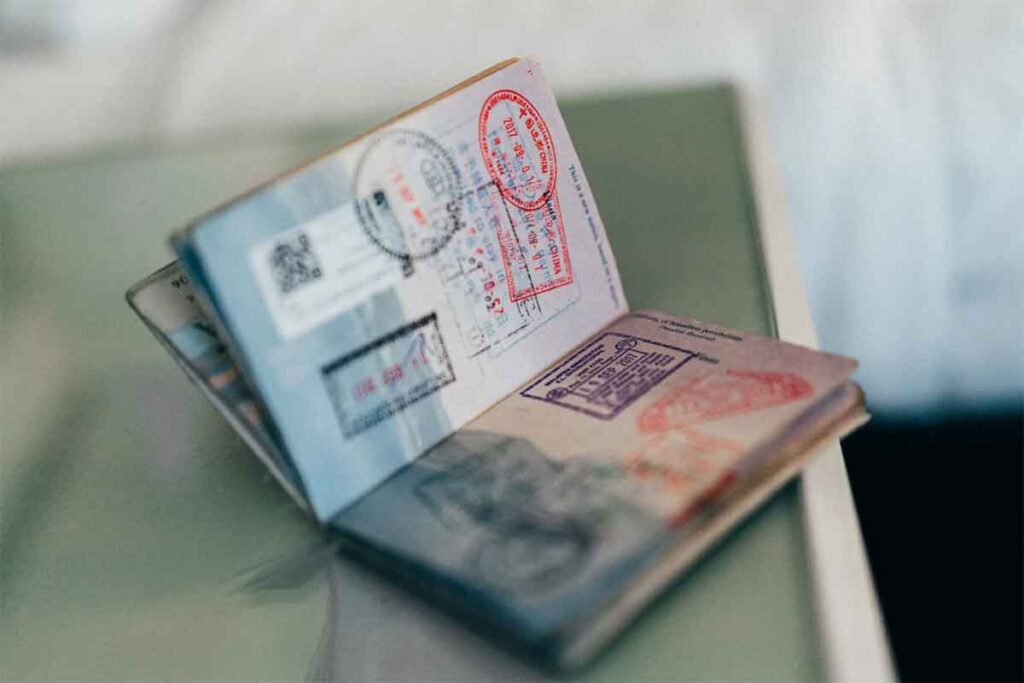
Two different documents are essential for going on safari in Tanzania.
- Passport, which must have a remaining validity of 6 months at the time of entry into the country.
- The Entry Visa, which is required for both tourist and business travel and costs €42.40. The entry visa must be applied for before departure at the Tanzanian Embassy in Rome or the Honorary Consulate in Milan, while the application form is easily downloaded at this link: http://www.embassyoftanzaniarome.info/
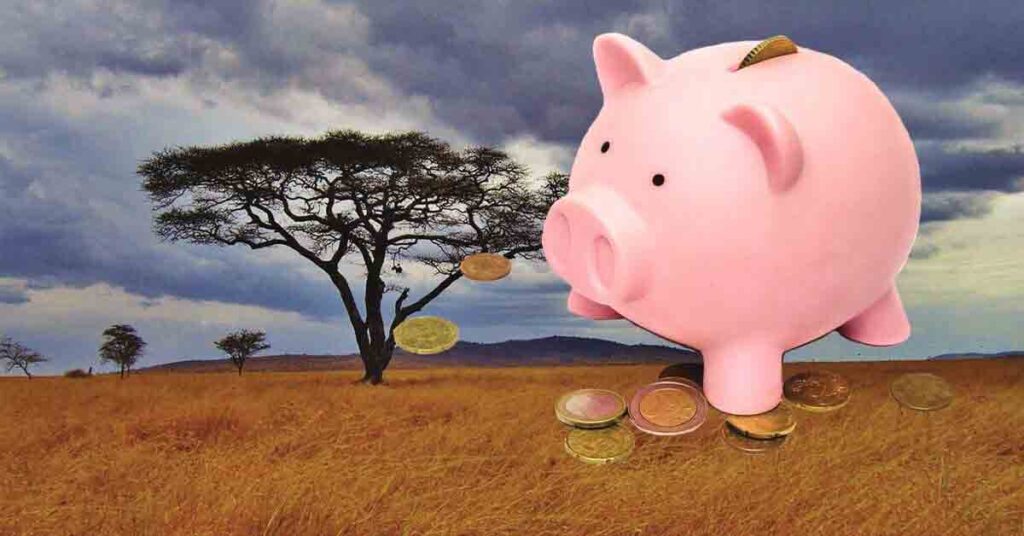
What is the currency in Tanzania
In Tanzania and Zanzibar, the Tanzanian shilling is used, the value of which is:
1 Euro = 2773.7720 Tanzanian Shilling
1 Tanzanian Shilling = 0.0004 Euro
1 US Dollar= 2245.6056
There are numerous exchange offices in Tanzania that accept both euros and dollars. Credit cards, on the other hand, are not widespread, and it is common for a fee of 5-10% to be charged on each purchase. It is advisable to exchange currency in your own city, as it is more convenient.
What is the time zone in Tanzania
Italy and Tanzania may seem so far apart, yet the time zone in Tanzania is only a few hours different. In Tanzania, in fact, they are two hours ahead of us. Their time zone is
- Eastern Africa Time (EAT), UTC/GMT +3
This means that if it is 10:00 a.m. at our place, it will be 12:00 p.m. in Tanzania.
What to bring for a safari
To travel safely in Tanzania, it is essential to remember several things and to carry clothing of two types: light and practical for safaris in the warmer parks and warm and windproof for colder times, such as on Kilimanjaro, especially when trekking to the top of the mountain.
Clothing should be light-colored (white is not recommended because it gets dirty right away and darker colors because they attract mosquitoes and sunlight), comfortable, light and opaque. It is essential to wear long-sleeved sweaters and shirts, opaque socks or otherwise clothing that reduces the area of exposed skin so as to avoid insect bites. Sweatshirts and windbreakers are also recommended during dry seasons, where morning and evening temperatures are quite low.
It is then essential to remember all documents and visas, medications, equipment and so on. To facilitate this, we have made a small checklist with everything you need. You can easily download the list with things to bring on a safari in Tanzania by clicking here.